

GreenFlood
India is a Vibrant Tropical Paradise.
Agriculture contributes around 17-18% to India’s Gross Domestic Product (GDP). With the current estimated GDP of India, it should be about $ 640 Billion (Rs. 53.5 Lakh Crores). With the various climatic regions, India can grow almost anything the world needs.
Problem Statement – Flow of Information from Market to Producer is a Big Challenge
India being a developing nation the infrastructure for handling and the access to market for this produce has been lacking due to unavailability of infrastructure and technology. Due to a lack of visibility on the market supply chain dynamics, farmers tend to grow crops based on local information of past trends rather than real-time information. This leads to the farmer having to always live with the anxiety of getting a good market for his produce if he can produce it at all beating the elements of nature. Agriculture in India is the largest employer steps need to be taken to provide more predictability on the market demands. Current farm-to-consumer challenges can be listed as follows
- Supply Chain Inefficiencies
- Market Access and Distribution Challenges
- Inadequate Cold Chain infrastructure
- Consumer Awareness and Demand
- High Post-Harvest Losses
- Regulatory and Policy Issues
- Technological Gaps
Quantifying the Losses
- Post-Harvest Losses: It is estimated that India loses around 30-40% of its fruits and vegetables due to inadequate cold storage and inefficient supply chain management.
- Economic Impact: These losses translate to an economic impact of billions of dollars annually, affecting the livelihoods of farmers and contributing to food insecurity.
- Food Waste: The Food and Agriculture Organization (FAO) estimates that food wastage in India is worth approximately 92,000 crores annually.
One of the biggest challenges in the perishable goods industry is the lack of visibility regarding supply and demand for both producers and consumers. Farmers often select crops randomly based on inconsistent data, without clear insights into market preferences. This disconnect results in inefficiencies and significant wastage due to delays and logistical challenges in the “Farm to Plate” cycle.
The solution lies in a professional marketing platform that can forecast market requirements, enabling farmers to make informed crop choices and estimate their earnings in advance. The industry urgently needs tools and marketing partners to consolidate market requirements and provide essential feedback, tools, and intelligence for efficient resource utilization.
The uncoordinated supply chain has severe financial implications for all parties involved. Farmers face economic hardships, sellers miss sales opportunities, and the nation suffers overall. As an agriculture-based economy, India’s harvest season should be a time of celebration, but it often brings acute anxiety for farmers. Currently, farmers achieve a fair profit margin of only 25-50%, discouraging them from producing highly perishable goods or resorting to risky, quick financial gains.
With market trends shifting towards healthy eating, consumers are increasingly opting for low-glycemic index foods. This presents an opportunity to promote organic produce, low glycemic index foods, and high-protein content foods. A coordinated market would bring significant rewards to all parties involved and benefit the environment.
Food waste is another critical issue, leading to lower prices for produce due to overproduction of certain crops at various times of the year. Without adequate food processing, preservation, or control, this excess produce often ends up as waste, contributing to environmental pollution. Addressing food waste is vital, especially in a developing country battling malnutrition. Surplus produce should be redirected to midday meal schemes, charity institutions, or undernourished groups to provide necessary nutrition.
In summary, a coordinated approach with professional marketing tools can transform the perishable goods market, enhancing profitability for farmers, ensuring better market alignment, reducing food waste, and improving overall sustainability.
Strategies for a New Market Order
- Market Access: Developing direct market access channels for farmers through farmer-producer organizations (FPOs), cooperatives, and digital platforms to reduce the role of intermediaries and ensure better prices.
- Investment in Cold Chain Infrastructure: Increasing the number of cold storage facilities and refrigerated transport options to ensure the safe and efficient movement of perishables.
- Technological Integration: Leveraging IoT, AI, and blockchain to enhance supply chain transparency, reduce wastage, and improve quality control.
- Government Initiatives: Strengthening and effectively implementing government policies and subsidies to improve agricultural practices and infrastructure.
- Training and Education: Training farmers on post-harvest handling and storage techniques, and educating consumers on the importance of proper storage.
By addressing these deficiencies and implementing strategic improvements, the perishable goods market in India can reduce losses, enhance efficiency, and meet the growing demand for fresh and high-quality produce.
As listed above the most important effort required is to reduce the number of hops on the supply chain. This currently lacking as the last mile seller does not have a connection or interface with the producer. Like any other manufacturing supply chain, standardization and production control tools need to be in place. Requirement for a technical, professional and dedicated marketing entity is required which will moderate the supply chain at the same time as it is finding new market opportunities to cater to.
What is Green Flood ?
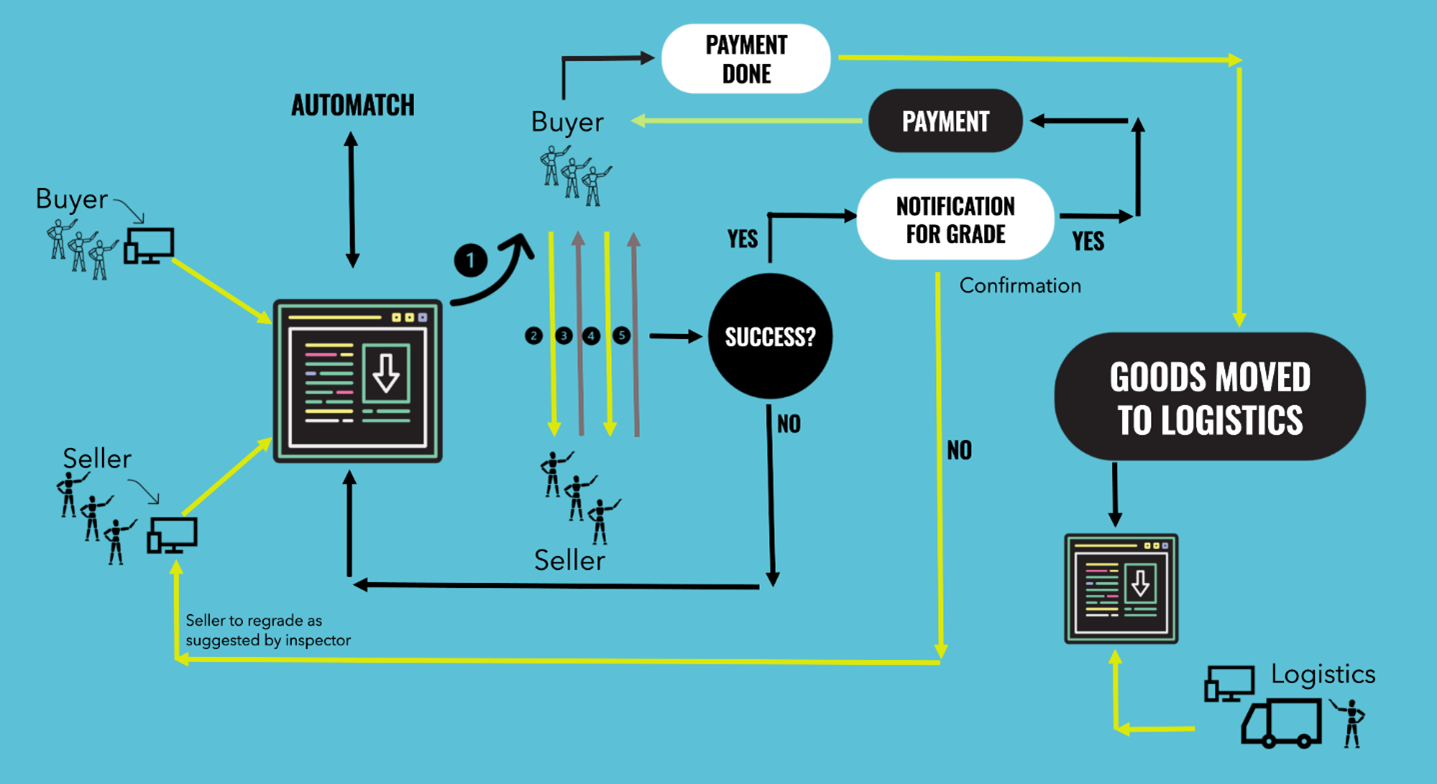
Greenflood is a web application currently being developed by NouveauNxt to address market deficiencies and connect farmers directly with last mile retailers. Designed to be highly scalable and transparent, Greenflood aims to benefit all parties involved in the trade by fulfilling market demands with minimal wastage and maximizing returns.
The platform is built to adapt to any market size, simulating current market dynamics through a logical user-friendly mobile application and a closed loop backend. This design ensures that all stakeholders in the trade can easily benefit by saving logistical expenses and faster farm to plate supply chain.
Since perishable goods do not require a license under current laws, Greenflood is accessible to anyone with a smartphone and a UPI ID. This inclusivity allows anyone with the time, skills and desire to participate in the market to join and benefit from the platform.
At full implementation, Greenflood will streamline the supply chain, reduce produce wastage, and provide better returns for farmers, vendors, and consumers alike.
Benefits of Green Flood
- Easy to use.
- Open to anyone who has a smartphone and UPI ID.
- Real-time negotiations possible between seller and buyer.
- Logistics is not a worry.
- Availability of cold storage facility.
- Real-time market analytics available to both buyer and seller.
- Secure transaction and payment guarantee.
- Produce grading is part of the process.
- Aggregation point close to the area of produce
- Low aggregated OPEX makes sure of benefit for both seller and buyer at least 15-20% for both ends.
- Faster access to the market for the produce.
- Sustainable packaging.
- Stop wastage.
- Capability to come to agreements of trade even before the produce comes to market.
- Deeper market understanding and capacity to influence end customers.
- Complete transparency for buyer and seller.
- Able to operate on very low CAPEX.
- Capacity to handle Vegetables, fruits and flowers.
Challenges for Green Flood
- Liability of the produce in transit.
- Error in grading leading to a dispute.
- Unsold produce leading to producers' loss of confidence in the platform.
- Changes in Govt. regulation
- Inserting the platform into the existing market.
- UPI transaction errors leading to payments getting blocked.
- IT infrastructure dependency.
- Manpower redundancy.
- Logistics strikes or leading to unable to process transactions.
- Unable to fulfill market requirements leading to loss of confidence in the platform.